UN Decade of Sustainable Transport Calls for Infrastructure Beyond EV Adoption
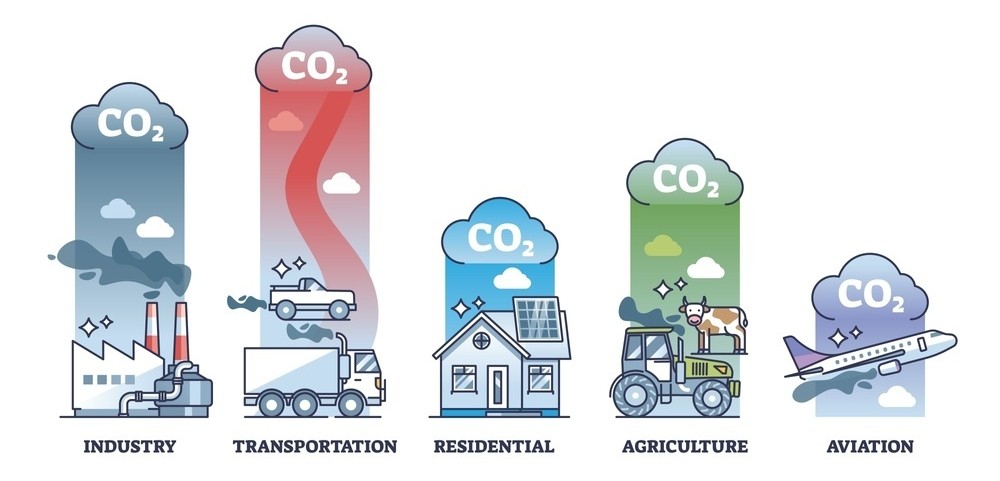
The United Nations Decade of Sustainable Transport 2026–2035 has begun with a mandate that requires implementation across every layer of the global mobility ecosystem. Its Implementation Plan calls for accessible mobility, low- and zero-carbon systems, efficient logistics, livable cities, safety, technological innovation, stronger governance, adequate finance and better use of data. It seeks to reorganise how mobility contributes to economic development, social inclusion, environmental protection and climate resilience. The plan is global and non-binding, which gives governments room to adapt it to national conditions. That flexibility is necessary. It also creates the central risk of the Decade: commitments may multiply faster than the institutional capacity to measure whether they have been fulfilled.
More than 80 voluntary commitments were submitted before the formal launch. They range from zero-emission vehicle programs and public-transport investment to freight corridors, walking initiatives, research networks, data platforms, climate-finance facilities and professional training. Such breadth demonstrates political appetite and institutional reach. The diversity of these commitments also creates a fragmented implementation landscape, where initiatives may define different baselines, collect different data and report progress through different institutional channels. A decade organised around diverse national and sectoral action therefore requires more than coordination. It requires a common accountability architecture capable of converting heterogeneous mobility activity into comparable, verifiable and jurisdictionally meaningful climate performance.
Accountability Is the Missing Infrastructure
The Implementation Plan recognises this problem indirectly. It calls for better data collection, analysis and use; stronger national statistical capacity; open knowledge platforms; complementary indicators; regional monitoring mechanisms; periodic reporting; and a mid-term review in 2030. The launch discussions also proposed a global transport sustainability tracker and placed monitoring, reporting and accountability among the Decade’s principal implementation requirements. These measures establish the direction of travel. They do not, by themselves, create the operational layer through which a vehicle, fleet, operator, corridor or national mobility system can be continuously assessed against declared objectives.
The Transportation Decarbonization Infrastructure addresses that missing layer by establishing architecture for transportation emissions accountability across heterogeneous mobility systems and all vehicle types. Its value lies in administering mobility emissions through a unified accountability architecture. The Transportation Decarbonization Infrastructure connects real-world operational data, vehicle condition, energy or fuel use, behavioral variables, jurisdictional rules, verification and climate-asset administration within one architecture. Instead of treating carbon performance as a retrospective calculation assembled from averages, it turns each vehicle or mobility asset into a measurable climate vertex within a national accountability network. Data becomes a signal; the signal is interpreted in context; verified performance produces an auditable climate record.
Why EV Adoption Alone Cannot Deliver Decarbonisation
Such architecture matters because fulfilment cannot be inferred from technology deployment alone. Registering more electric vehicles does not establish the emissions avoided if grid intensity, vehicle utilisation, battery condition, charging patterns and displaced travel are absent from the calculation. Introducing alternative fuels does not prove reduction without accounting for their production pathways and the operating condition of the assets consuming them. Expanding public transport does not automatically disclose whether private vehicle kilometers fell, whether occupancy improved or whether total system emissions declined. Sustainable mobility and transport decarbonization depends on technology, but climate accountability depends on the performance produced by that technology in actual operation.
This distinction changes the meaning of emissions reduction. Conventional inventories used for transportation emissions usually describe aggregate fuel consumption or apply standard emission factors to estimated activity. They remain useful for national reporting, but they are too coarse to govern complex national or commercial fleets continuously. A condition-aware system can distinguish between two technically identical vehicles producing different environmental outcomes because of maintenance, load, route, driving behavior, operating environment or mechanical degradation. It can identify whether an intervention delivered a genuine reduction, shifted emissions elsewhere or merely improved reported performance. The Transportation Decarbonization Infrastructure therefore allows the Decade’s climate objective to move from assumed transition to measured mitigation.
The implications extend beyond road vehicles. A common accounting architecture can connect passenger mobility, freight, logistics operators, shared mobility and mixed fleets across internal-combustion, hybrid, electric and hydrogen technologies. That technology-neutrality is important during a decade in which national pathways will differ sharply. Wealthier jurisdictions may accelerate electrification; developing economies may depend on legacy fleets for much longer; freight systems may combine road, rail, ports and last-mile delivery; rural communities may prioritize access before propulsion change. Accountability must remain consistent despite different technologies and development conditions.
Making the Circular Economy the benchmark
Circularity creates a further test. The Implementation Plan calls for full lifecycle sustainability, responsible sourcing, efficient use of resources and end-of-life management for vehicles, batteries and infrastructure. It also links reverse logistics and waste flows with the development of a circular economy. This extends sustainability beyond tailpipe emissions. A vehicle does not contribute to net zero transport simply because it is replaced by a newer one. Premature replacement may transfer emissions into manufacturing, minerals, shipping and disposal. Conversely, keeping a poorly maintained asset in service may lock in excessive emissions and safety risks.
Transportation Decarbonization Infrastructure makes circularity operational by treating vehicle condition as a climate variable rather than a maintenance detail. Diagnostics, repair, refurbishment, component replacement and lifecycle extension can be assessed against their effect on emissions performance. A repair that restores efficiency becomes measurable mitigation. Predictive maintenance becomes preventive environmental policy. Asset utilisation, mechanical health and remaining useful life become inputs into a continuous circularity decision: maintain, repair, refurbish, repurpose or retire. This is more economically rational than reducing the circular economy to recycling after value has already been destroyed.
The circular economy begins inside the operating asset.
Climate finance presents the Decade’s most consequential opportunity and its greatest credibility risk. Governments, development banks and private investors are mobilising capital for low-carbon infrastructure, resilient corridors, fleet transitions, sustainable fuels and public mobility at extraordinary scale. At the launch, development institutions described financing commitments running into tens of billions of dollars, while speakers repeatedly identified access to finance and carbon markets as essential implementation enablers. The voluntary commitments already include programs intended to create bankable projects and improve access to climate capital.
Capital, however, cannot be allocated efficiently when environmental performance remains weakly evidenced. Lenders need to know whether a financed fleet produced the promised reduction. Sovereigns need to determine whether incentives are improving national emissions performance or merely subsidizing asset acquisition. Insurers need verified information about condition, risk and utilisation. Carbon markets and emissions verification require additionality, traceability, integrity and control over issuance, transfer, retirement and revocation. Corporate buyers need defensible evidence before incorporating mobility reductions into Scope 3 claims. Without a trusted chain from activity to quantification and verification, climate finance remains exposed to inflated baselines, duplicate claims, weak attribution and greenwashing.
The infrastructure converts operational climate performance into finance-grade evidence. Secure data establishes the activity record required for robust emissions accountability. Condition-aware emissions logic determines performance against an appropriate baseline. Jurisdictional policy encoding applies the relevant regulatory and methodological rules. Verification and fraud controls protect the integrity of the result. Eligible mitigation can then enter a governed climate-asset lifecycle covering issuance, reconciliation, reservation, transfer, retirement, revocation and audit. The underlying architecture is designed to connect trusted hardware data, behavioral fraud suppression, dynamic policy requirements and carbon-credit administration within a unified architecture.
This does not mean every efficiency gain should become a carbon credit. It means every claimed reduction should pass through a system capable of determining whether it qualifies, who owns it, which jurisdiction governs it, whether it has been counted elsewhere and how it should be administered. That distinction is essential for Article 6 cooperation, voluntary markets, sovereign incentive programs, green bonds, sustainability-linked lending and results-based finance. Climate assets should emerge from accountability; accountability should not be reconstructed after an asset has been sold.
A national deployment would also strengthen governance beyond carbon markets. Ministries could observe emissions performance across regions, vehicle classes and operating environments rather than relying solely on delayed aggregate inventories. Fleet operators could identify inefficient assets and prioritize maintenance or replacement. Regulators could test the effect of standards and incentives. Cities could compare corridors, public fleets and logistics zones. Financial institutions could direct capital towards verified performance. The same transportation infrastructure would support emissions accounting, compliance, policy evaluation, circular asset management and climate-finance administration.
Fulfilment of the Decade will ultimately depend on this ability to connect global ambition with millions of local operating decisions. Commitments must become measurable programs; programs must become verified outcomes; outcomes must inform policy, finance and future investment. The UN framework correctly identifies collaboration, integrated governance, financing, capacity-building and data as the means of implementation. The missing question is how these means are assembled into a continuous system rather than maintained as separate institutional activities.
Transportation Decarbonization Infrastructure supplies that connective architecture. It does not replace national policy, UN monitoring, IPCC methodologies, the GHG Protocol or financial standards. It operationalizes the space between them. Scientific methodologies define how emissions may be quantified. Policies establish national objectives. Disclosure standards determine what organizations should report. Climate markets establish conditions for transferable environmental value. The Protocol provides the kinetic infrastructure through which operational mobility data supports transportation emissions accounting, climate finance, carbon markets and jurisdictional governance without losing context, integrity or jurisdictional meaning.
By 2035, success will not be judged by the number of declarations issued, vehicles announced or platforms launched. It will be judged by whether mobility systems became cleaner, safer, more accessible, more resilient and more economically productive—and whether governments can prove it. The Decade has supplied the mandate. The next task is to build the accountability infrastructure capable of carrying it.