Transportation AI Is Solving the Wrong Problem. Decarbonization Requires Carbon AI.
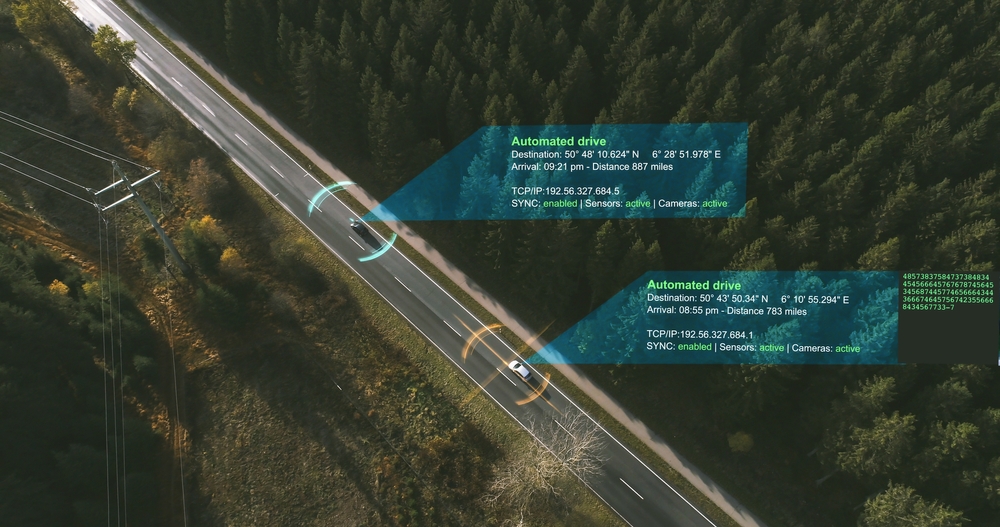
Artificial intelligence has become deeply embedded within modern transportation. It now optimises logistics networks, forecasts congestion, predicts maintenance failures, improves battery performance, assists autonomous driving and continuously refines operational efficiency across millions of vehicles. Few industries have adopted AI as rapidly or as broadly.
At the same time, transportation has entered a different transition.
Governments are no longer asking how transportation can become more efficient. They are asking how it can become measurably cleaner. Climate policy has shifted from encouraging technological innovation to requiring demonstrable environmental performance. Transportation is no longer being evaluated solely by how efficiently it moves people and goods, but by how credibly it can quantify, administer and ultimately reduce its climate impact. Those two transitions are often assumed to be complementary. They are not necessarily the same.
The transportation industry’s challenge is not a shortage of artificial intelligence. It is the assumption that AI models developed for operational optimisation can also perform transportation decarbonization. They cannot, because they were never designed for that purpose.
That distinction has received remarkably little attention despite its implications.
Transportation AI did exactly what it was created to do. It improved movement. It reduced operational costs. It increased utilisation. It made routing more efficient, maintenance more predictable and vehicles increasingly autonomous. Every major breakthrough was directed toward making transportation perform better as a mobility system.
Transportation decarbonization introduces an entirely different objective. Its purpose is no longer to optimise transportation. Its purpose is to determine, continuously and with scientific integrity, whether transportation is becoming environmentally compliant.
Those are fundamentally different computational problems. Optimisation seeks the most efficient outcome among competing operational choices.
Decarbonization must determine whether environmental performance has genuinely improved after every relevant physical, mechanical, behavioural and regulatory variable has been considered.
The difference appears subtle until one attempts to measure it.
A routing algorithm may successfully reduce journey time by fifteen minutes. A predictive maintenance model may identify a failing component before breakdown. A battery management system may extend available driving range. Each represents a legitimate operational improvement. None determines whether the vehicle actually produced fewer emissions than it otherwise would have under its continuously changing operating conditions.
Transportation has therefore arrived at an unusual moment in its technological evolution.
The industry possesses increasingly sophisticated intelligence for operating transportation systems. It still lacks equivalent intelligence for administering transportation decarbonization. That distinction becomes increasingly important because environmental performance is not an operational constant.
It changes continuously.
A vehicle does not produce identical environmental outcomes simply because it follows the same route twice. Between those journeys, its tyres have worn, its battery has aged, its mechanical efficiency has changed, its maintenance condition has evolved, weather patterns have shifted, traffic behaviour has altered and the energy supporting its operation may itself have become more or less carbon intensive. The operational identity of the vehicle remains unchanged. Its environmental state does not.
A century of transportation engineering was built around improving the performance of machines.
A century of transportation policy is now being built around improving the environmental performance of those same machines.
Although those objectives appear closely related, they depend upon entirely different forms of intelligence.
Engineering performance can often be evaluated through relatively stable operational parameters. Speed, fuel economy, travel time, battery range, asset utilisation and maintenance intervals all represent measurable engineering outcomes. Artificial intelligence excels at identifying patterns within these variables because they are largely deterministic. Given sufficient historical data, AI can forecast failures, optimise routes or recommend more efficient operating decisions with remarkable accuracy.
Environmental performance behaves differently.
It is not determined by a single engineering characteristic, nor by the efficiency of an individual component. It emerges continuously from the interaction between the vehicle, its physical condition, its operating environment, the energy supporting its operation and the regulatory framework within which it is being assessed. The consequence is profound.
Transportation emissions are not a property of a vehicle.
They are a property of a vehicle’s continuously changing operational state.
That distinction explains why conventional optimisation models begin to reach their limits when transportation enters the era of climate accountability.
An electric vehicle, for example, is often treated as though its environmental performance can be inferred simply from its drivetrain. In reality, identical vehicles rarely operate under identical conditions. A lithium-ion battery exposed to sustained high temperatures behaves differently from the same battery operating in colder climates. As batteries age, internal resistance changes, usable capacity declines and thermal behaviour evolves. Emerging solid-state batteries introduce an entirely different set of operating characteristics that will themselves change throughout their service life.
The battery is only one variable.
Tyre wear gradually increases rolling resistance. Incorrect tyre pressure alters energy consumption. Brake drag, drivetrain degradation, payload variation, road gradient, altitude, ambient temperature, humidity, traffic density and driving behaviour each influence propulsion efficiency in ways that cannot be represented by static assumptions. Even the carbon intensity of electricity supplied to the vehicle may change hourly as generation mixes fluctuate, while jurisdictional policies determine how those emissions should be interpreted, reported and verified.
None of these conditions remain fixed.
They evolve continuously throughout the operational life of every vehicle.
Today’s systems use AI to analyse yesterday, predict tomorrow and optimise the next journey. Transportation decarbonization, however, depends on continuously administering what is happening now. The challenge is not a lack of prediction; it is the absence of an operational carbon intelligence capable of authenticating, interpreting and administering emissions, compliance and climate performance as transportation actually occurs.
That requires far more than analysing location or fuel consumption.
It requires Carbon AI capable of continuously evaluating the changing variables that determine real-world environmental performance, including vehicle condition, component degradation, tyre wear and pressure, ambient temperature, terrain and topography, traffic conditions, payload, driving behaviour, maintenance history, battery chemistry, battery state of health, thermal management, cooling efficiency, energy source and jurisdictional policy requirements. A lithium-ion battery operating in extreme heat, a solid-state battery under different thermal conditions, worn tyres increasing rolling resistance, degraded mechanical components, or altitude affecting propulsion efficiency all influence actual emissions and energy performance. These conditions evolve continuously throughout the lifecycle of a vehicle, meaning transportation decarbonization cannot be administered through static assumptions or retrospective reporting. It requires an operational intelligence that continuously interprets changing physical conditions and translates them into authenticated environmental performance in real time. This is the point at which transportation decarbonization separates from conventional transportation intelligence.
One attempts to optimise decisions.
The other must establish environmental truth.
Those are not interchangeable objectives, because optimisation asks what should happen next, while environmental accountability must first determine what is actually happening now. That distinction will increasingly define the next generation of transportation infrastructure.
Not because existing AI has failed.
But because transportation decarbonization has created an operational requirement that did not previously exist. The implications extend well beyond artificial intelligence.
Every major technological transition eventually changes the way an industry is organised. Electrification changed propulsion. Connectivity changed information. Automation changed operations.
Transportation decarbonization is beginning to change accountability.
That distinction matters because accountability is not another feature that can be added to existing transportation systems. It becomes the operating condition through which transportation participates in climate governance, financial markets and increasingly regulated environmental economies.
History suggests that industries rarely transform because a new technology becomes available.
They transform because the operating assumptions of the industry itself change.
Transportation spent more than a century asking how vehicles could move faster, carry more, consume less fuel and operate more efficiently. Artificial intelligence accelerated that progress by making transportation increasingly predictive, connected and autonomous.
The next question is fundamentally different.
Not how transportation moves.
But how transportation continuously proves its environmental performance.
That question cannot be answered by intelligence designed to optimise movement alone.It requires intelligence capable of establishing authenticated environmental truth throughout the operational life of transportation itself.
The emergence of Carbon AI therefore reflects something much larger than another application of artificial intelligence. It represents the beginning of a new operational discipline in which transportation is no longer managed solely as a system of vehicles, roads and logistics, but as a continuously accountable participant within climate and economic systems.
As governments move from climate commitments to implementation, as carbon markets increasingly depend upon authenticated evidence and as transportation becomes progressively integrated into sovereign climate strategies, the quality of environmental administration will become as important as the efficiency of transportation itself.
The future of transportation will not be defined simply by how intelligently vehicles move. It will be defined by how intelligently transportation understands, authenticates and continuously administers its environmental reality.