The Journey Before Carbon
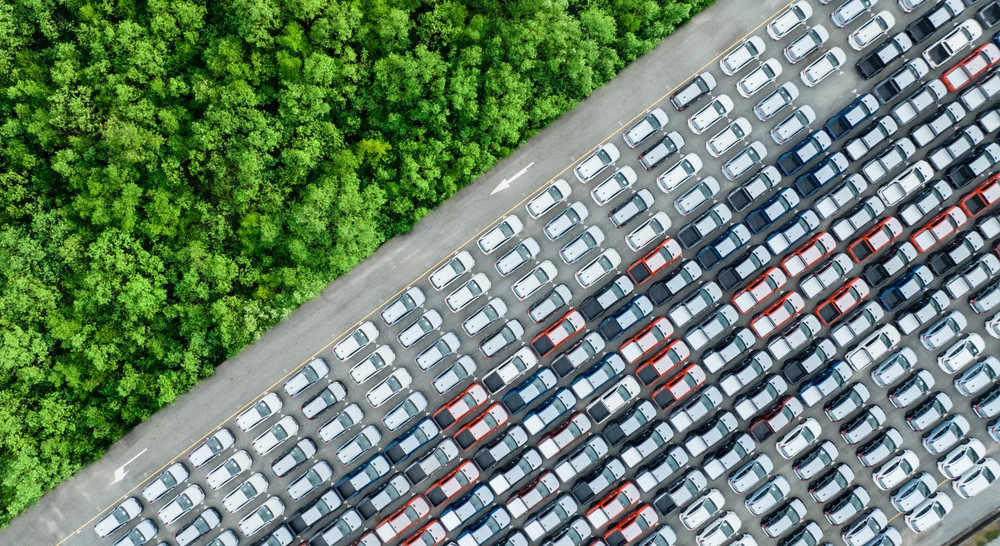
Why transportation has been measured backwards—and why the future of climate accountability begins long before an emissions calculation.
Most revolutions begin with a question everyone thought had already been answered.
For centuries, disease was believed to spread through bad air. Economists once measured the wealth of nations almost entirely by the gold stored in their vaults. Early astronomers watched the heavens convinced that everything revolved around the Earth. Each belief was built on evidence. Each eventually proved incomplete because the wrong question had been asked from the beginning.
Transportation may be approaching a similar moment.
For decades, the environmental conversation has focused on what comes out of a vehicle. Fuel consumption. Tailpipe emissions. Battery efficiency. Kilometres travelled. More recently, artificial intelligence, route optimisation and electrification have expanded that discussion. Together they have produced remarkable progress, improving efficiency while reducing the environmental impact of moving people and goods.
Yet despite this progress, an uncomfortable reality persists.
The transportation sector generates more operational data than at any point in history, but confidence in its environmental performance has not grown at the same pace. Governments still struggle to compare outcomes across jurisdictions. Supply chains often rely on different methodologies. Sustainability reports frequently describe the same activity in different ways. Even organisations committed to rigorous environmental reporting arrive at materially different conclusions from remarkably similar transportation systems.
If data continues to multiply while understanding remains fragmented, perhaps transportation is not suffering from a shortage of information.
Perhaps it is suffering from a shortage of perspective.
The instinctive response to transportation emissions is almost always to measure energy.
How much fuel was consumed?
How much electricity was used?
How many tonnes of carbon dioxide were emitted?
These are sensible questions. Without them, environmental reporting would be impossible.
But they are not the first questions transportation asks.
Transportation begins much earlier.
Before a litre of fuel is burned, a vehicle already has a history. It has been maintained—or neglected. Components have aged differently. Tyres grip the road with varying efficiency. Loads differ. Roads change. Traffic fluctuates. Weather reshapes performance. Drivers make thousands of decisions that no emissions factor can predict in advance. Infrastructure itself influences the journey before the engine has completed its first kilometre.
By the time carbon is finally measured, transportation has already written a far more complex story.
The emissions calculation records the ending.
It rarely explains the plot.
Imagine two delivery vehicles leaving the same warehouse at exactly the same time.
They carry identical payloads. Travel identical distances. Consume almost identical quantities of energy. By conventional reporting standards, they appear environmentally comparable.
Yet one vehicle has spent years receiving preventative maintenance. Its engine operates within expected tolerances. Tyre pressures remain consistent. Braking systems perform efficiently. Its route encounters steady traffic and well-maintained roads.
The second vehicle tells a different story. Maintenance has been inconsistent. Congestion forces repeated acceleration. Road surfaces increase rolling resistance. Mechanical wear subtly reduces efficiency long before failure becomes visible. The driver compensates in ways no emissions inventory records.
Their carbon footprints may appear similar.
Their environmental performance is not.
The difference is invisible until transportation is understood as an operating system rather than a collection of isolated events.
That distinction matters because environmental performance is never created by fuel alone.
It emerges from the continuous interaction of vehicles, people, infrastructure, maintenance, operating conditions and policy—all influencing one another long before a sustainability report is written.
This is where much of today’s climate conversation quietly changes direction.
Environmental accounting has become increasingly sophisticated. Reporting standards continue to mature. International guidance has strengthened transparency, comparability and disclosure. These developments have raised the quality of climate reporting across almost every major sector.
Transportation, however, presents a challenge that few other industries share.
It is not a fixed process.
It is a living system.
Every journey slightly changes the environmental behaviour of the next. Every maintenance decision alters future efficiency. Every infrastructure improvement influences thousands of vehicles simultaneously. Every regulatory change reshapes operational behaviour across entire networks.
Transportation does not produce isolated environmental events.
It produces relationships.
Those relationships are precisely what conventional measurements struggle to preserve.
Fuel tells us what was consumed.
Trip optimisation explains where efficiency improved.
Neither fully explains why environmental performance emerged in the way it did.
That missing “why” has become one of the most important unanswered questions in transportation climate science.
The consequence extends well beyond emissions reporting.
Climate finance increasingly depends on evidence. Carbon markets depend on confidence. Sustainability disclosures demand consistency across organisations, jurisdictions and reporting environments. Public policy depends upon understanding not simply whether emissions changed, but what caused them to change in the first place.
In other words, environmental outcomes are no longer enough.
Decision-makers increasingly need environmental understanding.
Those are not the same thing.
A calculation can describe the result.
Only context can explain it.
And explanation is where accountability begins.
For most of modern environmental reporting, context has been treated as supporting information.
It is added after the calculation—an explanation attached to the result.
Transportation suggests the relationship should be reversed.
Context comes first.
Carbon comes later.
That may sound like a subtle change in language, but it represents a profound change in how transportation is understood. Every environmental outcome begins as an operational event before it ever becomes an emissions figure. A vehicle is inspected. A component wears. A route changes. Traffic slows. Weather shifts. A driver adapts. Infrastructure improves—or deteriorates.
Each event leaves behind evidence.
Individually, that evidence appears ordinary.
Collectively, it explains why environmental performance emerged in the first place.
Viewed this way, transportation stops behaving like a sequence of disconnected journeys. It becomes an interconnected environmental system whose performance is continuously shaped by thousands of relationships rather than one dominant variable.
That is not simply a richer dataset.
It is a different way of observing transportation itself.
This distinction explains why adding more sensors, more telemetry or more artificial intelligence does not automatically produce better accountability.
Technology can multiply information.
It cannot organise meaning on its own.
A transportation network may generate billions of operational signals every day, but unless those signals preserve their relationship to one another, they remain isolated observations rather than coherent environmental evidence.
Climate decisions are rarely made from isolated observations.
Governments allocate funding based on patterns.
Fleet operators optimise around behaviour.
Financial institutions evaluate confidence.
Regulators compare evidence across organisations and jurisdictions.
Each requires continuity rather than fragments.
The challenge therefore is no longer collecting transportation data.
It is preserving the story hidden within that data.
This is where transportation emissions accounting begins to evolve beyond traditional reporting.
An emissions inventory tells us what happened.
A native transportation decarbonizaion framework asks a different question:
What chain of operational evidence produced that outcome?
The distinction is more important than it first appears.
When environmental evidence remains connected—from vehicle condition and operational behaviour to infrastructure, maintenance and energy use—it becomes possible to understand transportation not simply as a source of emissions, but as a continuously evolving environmental system.
Within that system, carbon is no longer the starting point.
It becomes one expression of a much larger operational reality.
This perspective transforms accounting from an annual reporting exercise into a living process of interpretation.
Every journey contributes.
Every maintenance event matters.
Every operational decision leaves an environmental fingerprint.
Individually, those fingerprints reveal little.
Together, they create transportation climate intelligence.
This is precisely where the transportation sector appears to be heading.
The work of the International Transport Forum and the Organisation for Economic Co-operation and Development increasingly points towards the need for more harmonised transport greenhouse gas accounting, stronger evidence and greater consistency across methodologies. Likewise, ISO 14083 has advanced the quantification and reporting of greenhouse gas emissions from transport chain operations, providing an important methodological foundation for organisations seeking greater comparability.
These developments are significant.
But they also highlight a broader opportunity.
Standards describe how emissions should be reported.
They do not function as the operational layer that continuously captures, contextualises and preserves transportation evidence before reporting begins.
That missing operational layer may ultimately determine whether transportation can support the growing demands of climate governance, sustainable finance and increasingly sophisticated environmental disclosure.
This is the question driving Metre 360’s research.
Our work begins with a simple premise: transportation cannot be fully understood through fuel consumption, trip optimisation or isolated emissions calculations alone. It must first be understood as an environmental operating system.
That philosophy underpins our research into Transportation Emissions Accounting, Mobility Carbon Intelligence and the Transportation Decarbonization Infrastructure—an approach that seeks to organise operational signals into contextual evidence before translating that evidence into trusted environmental outcomes.
The objective is not to replace existing reporting standards.
It is to strengthen the operational foundation beneath them.
When transportation becomes accountable at its source, environmental reporting becomes more meaningful. Climate disclosures become more consistent. Carbon markets gain stronger evidence. Policy decisions become better informed. The same transportation activity begins creating not only environmental outcomes but environmental understanding.
The history of infrastructure teaches an important lesson.
The most influential systems are rarely the most visible.
People remember the railway.
Few remember the signalling system that allowed it to operate safely.
They remember the internet.
Few think about the protocols quietly carrying every message across the world.
Transportation may be entering a similar chapter.
The next breakthrough may not come from another battery chemistry, another optimisation algorithm or another emissions calculator.
It may come from understanding transportation differently.
Not as a collection of trips.
Not as a collection of vehicles.
Not even as a collection of emissions.
But as a living environmental system whose operational context determines the quality of every climate decision that follows.
The future of sustainable transportation will not be shaped solely by how accurately carbon is calculated.
It will be shaped by how completely transportation itself is understood.